
Study in Australia for Bangladeshi Students: Complete Guide 2026
Dreaming of golden beaches, vibrant cities, and a world-class education? For many, the answer is a resounding “Yes!” to study in Australia in 2026. This sun-drenched continent offers more than just stunning landscapes; it provides an unparalleled academic experience, diverse culture, and pathways to global career success. But with recent changes in visa regulations and living costs, is 2026 still the right time to study in Australia in 2026? Absolutely! With the right information and preparation, your journey to study in Australia in 2026 can be incredibly rewarding.
Australia remains a top-tier destination for global education. However, the 2026 landscape has evolved into a “high-integrity” model. To successfully study in Australia in 2026, applicants must now navigate the Genuine Student (GS) requirement, tighter migration caps, and a stronger focus on skills that align with the Australian economy.
1. 2026 Visa Policy & Core Requirements
The most significant shift for those who wish to study in Australia in 2026 is the transition from the old GTE to the Genuine Student (GS) requirement. This new framework prioritizes academic intent and financial stability.
Comparison of Core Requirements (2026 Update)
| Policy Area | Pre-2024 Requirement | Current 2026 Requirement |
| Visa Intent | GTE (Temporary intent) | Genuine Student (GS) |
| Living Costs | AUD 24,505 | AUD 29,710 per year |
| English (Visa) | IELTS 5.5 | IELTS 6.0 (or equivalent) |
| Work Rights | 48 hours per fortnight | 48 hours per fortnight |
| Post-Study Age | Up to 50 years old | Up to 35 years (Exceptions for PhD) |
2. Top Universities to Study in Australia in 2026
When you choose to study in Australia in 2026, selecting a high-ranking institution is vital for both your education and your visa processing speed. Level 1 universities (Group of Eight) typically receive priority processing.
Top Australian Universities 2026
| National Rank | University Name | Global Reputation |
| 1 | University of Melbourne | Ranked #13 Globally |
| 2 | The University of Sydney | Historic Prestige |
| 3 | Monash University | Pharmacy & Medicine Leader |
| 4 | The University of Queensland | Research Excellence |
| 5 | UNSW Sydney | Top for Engineering/Tech |
| 6 | Australian National University | Politics & Policy |
| 7 | University of Adelaide | Innovation & Science |
| 8 | UTS Sydney | Leading Young University |
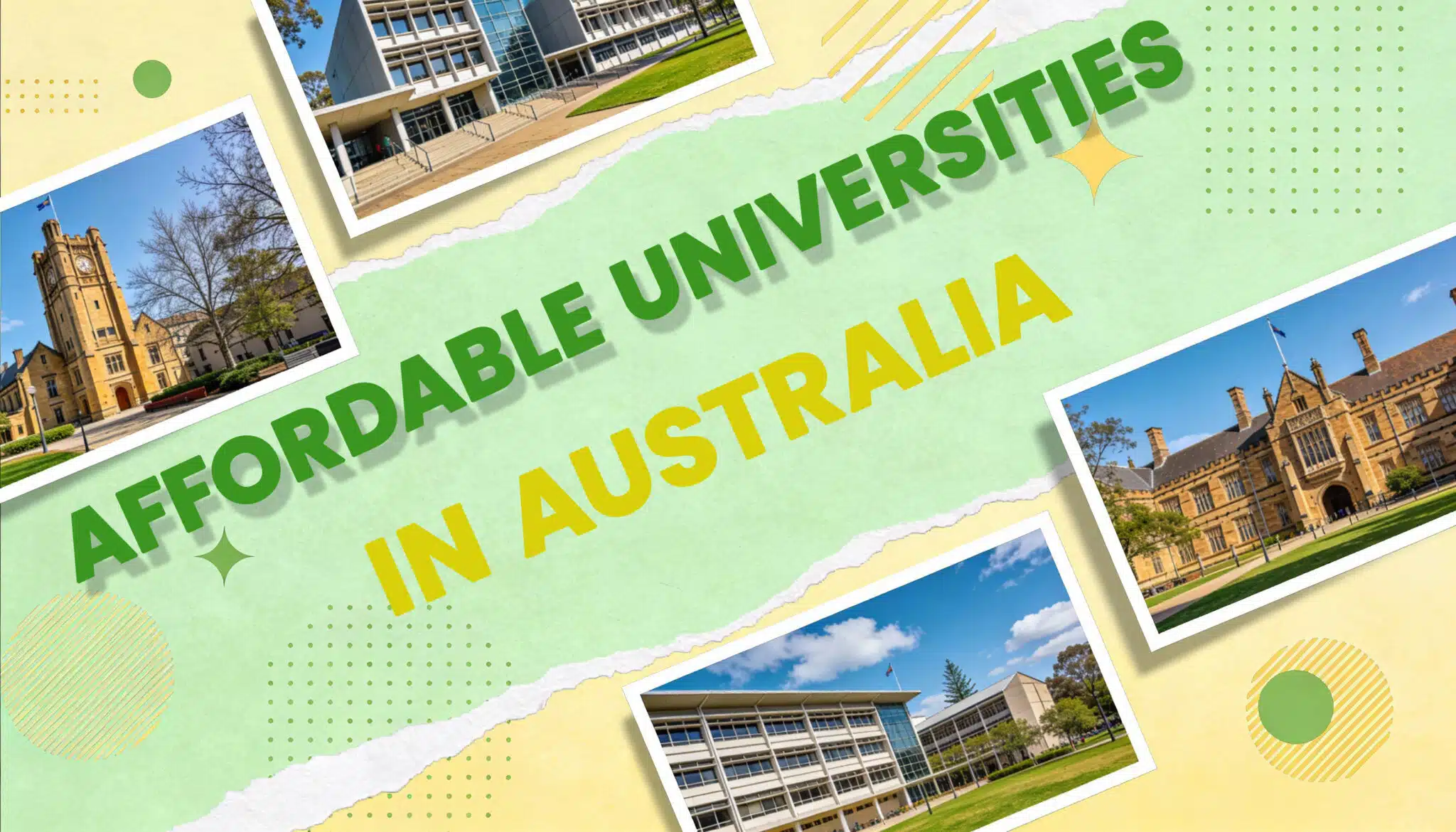
Affordable Options in Major Cities across Australia
-
Victoria University (VU)—Melbourne: Known for its “Block Model” of learning (one subject at a time) and competitive fees starting at AUD 24,000.
-
Western Sydney University (WSU)—Sydney: One of the more affordable options in the Sydney area, with fees starting around AUD 28,000.
-
Torrens University: A private university with flexible intakes and high scholarship availability (fees starting at ~AUD 22,000).
3. Best Courses and Job Opportunities
To maximize your ROI, you should study in Australia in 2026 in fields listed on the Priority Migration Skilled Occupation List. These courses offer the clearest pathways to a Temporary Graduate visa (Subclass 485) and permanent residency.
In-Demand Courses & Career Growth
| Field of Study | Popular Job Roles | Starting Salary (AUD) |
| Healthcare | Registered Nurse, Aged Care | $78,000–$95,000 |
| IT & Tech | Cybersecurity, Data Scientist | $85,000–$130,000 |
| Engineering | Civil, Renewable Energy | $82,000–$115,000 |
| Education | Early Childhood Teacher | $72,000–$88,000 |
| VET Trades | Carpenter, Electrician | $65,000–$100,000 |
Essential Rules for 2026
-
Work Hours: Most student visa holders can work up to 48 hours per fortnight during the semester. However, postgraduate research students (Masters by research and PhD) generally have unlimited work rights once their course has commenced.
-
Casual Loading: If you are hired as a “casual” employee rather than “part-time,” your base pay is usually 25% higher to cover the lack of sick pay or annual leave.
-
TFN & Rights: You must apply for a Tax File Number (TFN). You are legally entitled to the same workplace protections and minimum wage as Australian citizens.
Top Course Trends for 2026
If you are currently selecting your program to study in Australia in 2026, these are the high-demand sectors in the Australian market:
-
Healthcare & Nursing: Australia faces a projected shortage of over 20,000 nurses by 2030, making this a top priority for PR (Permanent Residency).
-
IT & Digital Economy: Roles in cybersecurity, AI, and data science are seeing 2026 salary averages between AUD 80,000 and 140,000.
-
Renewable Energy & Engineering: As Australia pushes toward green energy targets, civil and renewable energy engineers remain on the critical skills list.
4. Tuition Fees for Studying Abroad
The cost to study in Australia in 2026 depends on your degree level. In 2026, many universities have adjusted fees to reflect inflation and enhanced campus facilities.
Annual Tuition Fees (Estimated 2026)
| Education Level | Annual Fee Range (AUD) | Duration |
| Undergraduate (Bachelor) | $20,000–$50,000 | 3-4 Years |
| Postgraduate (Masters) | $22,000 – $58,000 | 1.5-2 Years |
| Doctoral (PhD/Research) | $20,000–$45,000 | 3-4 Years |
| Vocational (VET) | $6,000 – $25,000 | 1-2 Years |
5. Cost of Living in Australia
To study in Australia in 2026, the Department of Home Affairs requires you to prove you have at least AUD 29,710 for annual living expenses. This ensures you can cover rent, food, and transport without financial stress.
Monthly Living Expenses Breakdown
| Category | Estimated Cost (Monthly) | Notes |
| Shared Rental | $800–$1,400 | Depends on the city (Sydney is the highest). |
| Food & Groceries | $400–$700 | Based on home cooking |
| Public Transport | $120–$200 | Student concessions available |
| Utilities/Phone | $150–$250 | Electricity, Gas, Internet |
| Personal/Misc | $200–$400 | Entertainment & Shopping |
6. Higher Studies & Research Pathways
For many, the goal is to study in Australia in 2026 at the highest levels of research. Higher studies (MPhil and PhD) offer unique benefits, including a higher age limit (50 years) for post-study work visas and generous scholarships like the Research Training Program (RTP).
7. Frequently Asked Questions (FAQ)
Q: Can I mention my desire for PR in my Genuine Student (GS) Statement?
A: Yes. Under the 2026 rules, you may express an interest in post-study pathways. However, your primary purpose for study in Australia in 2026 must be for education. You must still demonstrate that you have a viable future or career path outside of Australia as a backup.
Q: What is the current work limit for international students?
A: Most students can work 48 hours per fortnight during the semester and unlimited hours during breaks. Masters by Research and PhD students have unlimited work rights year-round.
Q: Is the two-year post-study work visa extension still available?
A: No. The pandemic-era “automatic” 2-year extensions were scrapped in mid-2024. Current work rights are 2 years for bachelor’s/master’s by coursework and 3 years for master’s by research/PhD.
Q: How do I prove I have the AUD 29,710 for living costs?
A: You must provide verifiable evidence like bank statements, fixed deposits, or education loan approval letters. The funds must be easily accessible to you while you study in Australia in 2026.
Conclusion: Start Your Journey Today
The path to study in Australia in 2026 requires more preparation than ever before. With the national cap on student places, early application is your best strategy. Ensure your financial documents are traceable, your English scores are high, and your course choice aligns with your long-term career goals.
When looking at the best courses to study in Australia, students in the current 2026 landscape are increasingly prioritizing fields with high employability and clear migration pathways, such as healthcare, information technology, and engineering. Deciding on studying in Australia now involves navigating updated “Genuine Student” requirements and a more robust visa framework designed to ensure high-quality educational outcomes.
For those planning to study in Australia 2026, early preparation is essential, as the government has introduced more rigorous financial capacity checks and academic evidence standards for several South Asian countries to maintain the integrity of its world-class education system.




 WhatsApp Now!